

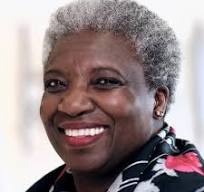
Living Theology for Racial Justice Sunday: A Reflection
By The Reverend Modupe Adeoye
Advocacy Programme Officer for AMEN (Anglican Minority Ethnic Network), Ordained Priest and Mental Health Chaplain.
“In the beginning God created the heaven and the earth”, (Genesis 1:1). So, God created humankind in His own image, in the image of God He created them; male and female, He created them, (Genesis 1:27). Beneath the layer of the visible differences in our skin complexion, we are all the same. Each one of us is a miracle of creation. My heart beats just like yours and is intricately connected to other organs; each one functions rhythmically as a complex system within complex systems. Cut me, I bleed red blood. Each one of us without exception is fearfully, wonderfully and beautifully made, (Psalm 139:14). Every breath, I take is a celebration of the unfathomable God, whose divine power is beyond human comprehension. My own heart beats for God.
“For as the body is one and has many members, but all the members of that one body, being many, are one body, so also is Christ Jesus. For by one Spirit, we were all baptised into one body—whether Jews or Greeks, whether slaves or free—and have all been made to drink into one Spirit. For in fact the body is not one member but many …”, (1 Corinthians 12:12-27).
The Racial Justice Sunday initiative was started by the Methodist Church in 1995 following the 1993 premeditated, targeted, and unprovoked brutal murder of Black teenager Stephen Lawrence—who was born into and raised in an active and committed Christian Methodist family. It was in 2017 that the second Sunday of February was designated as Racial Justice Sunday in the UK.
The core objectives are to use the Racial Justice Sunday yearly celebration to:
(a) focus minds on the importance of racial justice;
(b) encourage people to reflect;
(c) give thanks to God for the diversity of humankind,
(d) petition God to bring an end to conflicts, misunderstanding, racism and injustices;
(e) move beyond paying lip service to racial justice and take sustainable actions that truly makes a difference; and
(f) raise funds for national and local racial justice initiatives.
Why Racial Justice?
Racial justice fosters just behaviour or treatment by working to dismantle racial and ethnic discrimination and embedded practices of unfair, unjust and/or unreasonable treatment of others on the grounds of their race and ethnicity. ‘Race’ is an engineered autocratic social construct that puts people, who are being discriminated against at a great disadvantage. The use of ‘race’ as an official classification tool for differentiating, segregating, and oppressing people dates to the start of the Spanish Inquisition in 15th Century. By the 17th Century; racism gained deeper roots. Certain groups of people used it to uphold hierarchies, dominate, justify slavery, marginalise and oppress others they classed as different.
So, how far have we come since then? The engineered construct of race is still continually used to uphold deeply embedded, inherited unjust practices to further reinforce and normalise structures of systemic racism and discrimination because these are deeply embedded in the psyche of people and what they accept as behavioural norms.
Jesus commanded us to “love the LORD your God with all your heart and with all your soul and with all your mind and with all your strength”, (Mark 12:29-30), and to “love our neighbours as ourselves”, (Mark 12:31), and in so doing, we shall not be far from the kingdom of God, (Mark 12:34). Yet, there are people who claim to love God and still hold the belief out of ignorance that people of colour as created by God, are not created equal and that their humanity must be denied.
The LORD is just and a God of justice, (Isaiah 30:18) — a belief central to many faiths. God loves “righteousness and justice”, (Leviticus 19:15; Psalms 33:5,106:3; Isaiah 1:17, 61:8), and we are instructed to “maintain love and justice”, (Hosea 12:6). As such, where there is injustice, love exists not; love without justice, is not love.
In an encounter with some ‘Christians’ who were not being nice, I could not help but ask two questions:
- What would you do when you get to the pearly gates expecting to see only St Peter and you see me on a special assignment standing there holding your case files?
- And if you do make it into heaven, what if you find that God appears as Black and female?
No one is born with hate in their heart; it is a learned behaviour. Until humankind in totality can value and accept one another, celebrate the glory of God in every person, regardless of ethnicity, heritage, nationality, gender, status and creed; we will continue to shortchange ourselves. James H. Cone emphasised in his book ‘Black Theology of Liberation (2010), that the humankind is both connected and interdependent and everyone’s freedom is intrinsically linked to the liberation of everyone.
The people and societal cost of racial injustices are detrimental and beyond measure. Racial injustices including racism and racial biases also put lives at risks, undermine effective safeguarding, have adverse effect on wellbeing and growth.[1] [2] [3] Imagine communities and society at large, where all people are valued, and their contributions recognised and rewarded justly. By harnessing our diversity, we can foster a more productive, resilient, and inclusive society in which all people are valued and treated as equal, with respect and dignity, thus empowering all flourish.
This year’s Racial Justice Sunday’s theme is ‘Love Your Neighbour’. Racial justice is not just for one Sunday per year; we must live it daily and celebrate our diversity. We must, therefore, keep persevering, work together in unity and support one another for justice and peace. Apostle Paul outlined in 1 Corinthians 13 that love is more than emotions — a feeling for another; it is about action. Jesus stressed that we are to “love, not in word or speech, but in truth and action”, (1 John 3:18). Indeed, as Christians, must live by examples; we will be known by our fruits, (Matthew 7:16).
The Church is the Body of Christ — Jesus is the head, (Ephesians 1:22-23). We are charged to “Speak out for those who cannot speak, and for the rights of all the destitute”, (Proverbs 31:8), and to “Rescue the poor, weak and needy; deliver them from the hand of the wicked”, (Psalm 82:4). — These are challenging mandates that many people and communities have continued to struggle to live up to. In the words of Martin Luther King Jr (1967), “there comes a time when silence is betrayal”.
One of my daily prayers that I adapted from the ‘Serenity Prayer’ by the American theologian, Reinhold Niebuhr is:
I pray—
God, grant me the courage—
Not to accept the things that I can change.
Discernment in all matters,
Strength to make changes that will add value—
To make positive differences.
– Modupe Adeoye (2013)
“All have sinned and fallen short of the glory of God.
The hatred which divides nation from nation, race from race, class from class,
Father forgive.
The pride which leads us to trust in ourselves and not in God,
Father, forgive.
Be kind to one another, tender-hearted, forgiving one another,
as God in Christ forgave you.”
- from the Coventry Cathedral ‘Litany of Reconciliation’ -https://www.coventrycathedral.org.uk/reconciliation/reconciliation-ministry/litany-of-reconciliation
[1] https://www.gov.uk/government/news/safeguarding-reviews-silent-on-black-asian-and-mixed-heritage-children
[2] https://nhsrho.org/news/independent-review-explores-the-cost-of-racism-to-the-nhs/
[3] https://www.imf.org/en/publications/fandd/issues/2020/09/the-economic-cost-of-racism-losavio